Author: Mojca Haberman, Slovenian national team member in depth freediving and member of H2O Team
This year’s competitive season was one of the most intense for me, but also one of the most successful so far. In less than two months I competed at two depth freediving world championships – in August at the CMAS World Championship in Honduras, and at the end of September and beginning of October at the AIDA World Championship in Cyprus. I finished the season with fourth place at the CMAS championship, a new personal best in the bifins discipline and a bronze medal in the overall ranking of the AIDA championship.
Behind these results, however, there is much more than a few successful dives. A lot of preparation, adapting, overcoming unexpected problems and, above all, learning how to stay calm even when things don’t go to plan.
CMAS – Roatán, Honduras: one step away from the podium
In August I travelled to the Caribbean island of Roatán in Honduras, where the CMAS Depth Freediving World Championship took place from 14 to 27 August.
Roatán offers excellent conditions for depth freediving. The warm, blue Caribbean Sea and great depths right next to the shore create an environment freedivers can only dream of.
I arrived on the island a little earlier to have enough time to adjust to the time difference, the environment and the conditions in the water. At the world championship I competed in three disciplines: monofin (CWT), bifins (CWTB) and free immersion (FIM).
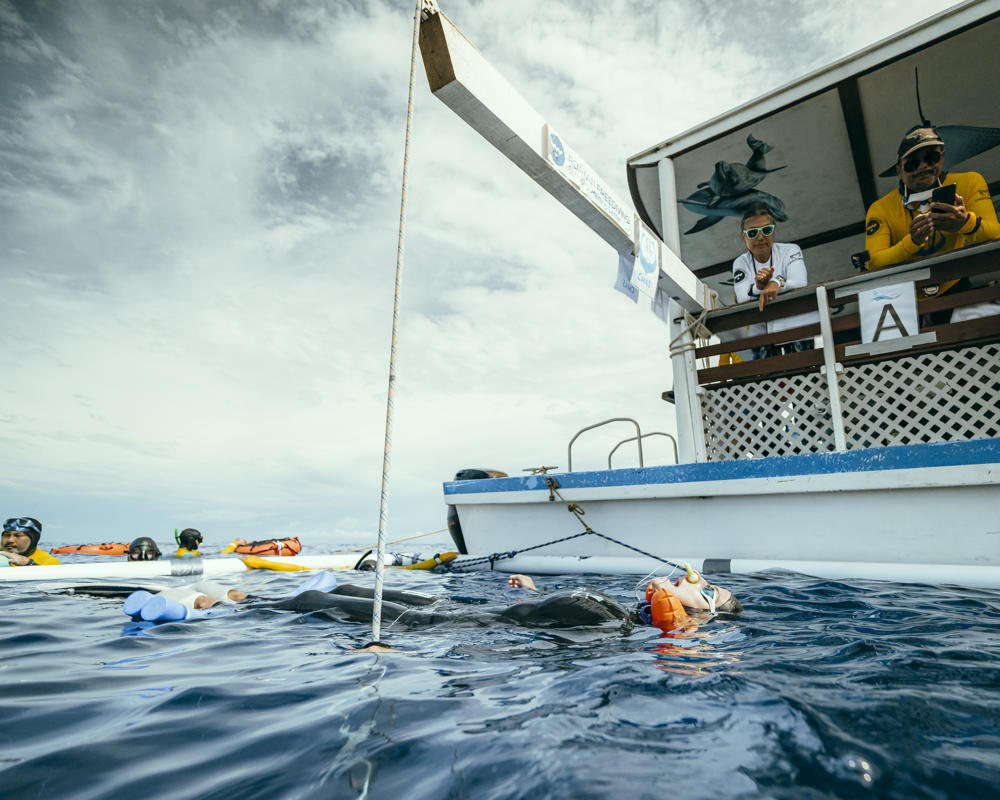
The start of the championship was not what I had hoped for. On the first competition day I had to end my dive early, which meant a yellow card and quite a lot of disappointment. In depth freediving, even the smallest problem can affect the whole dive. What matters is how you respond to such moments and how quickly you manage to rebuild your self-confidence.
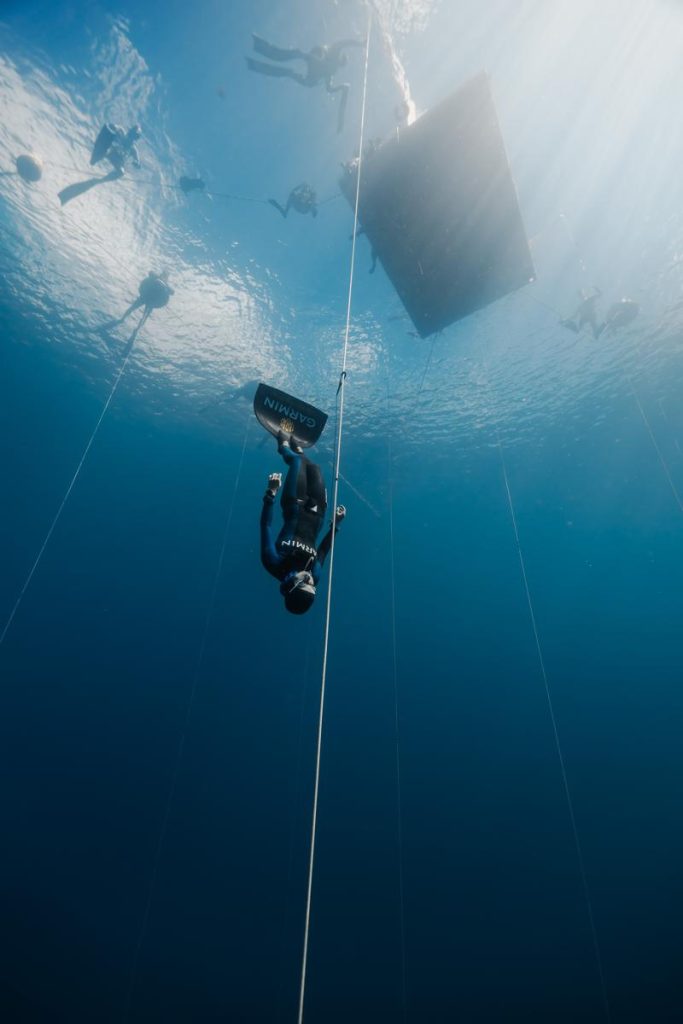
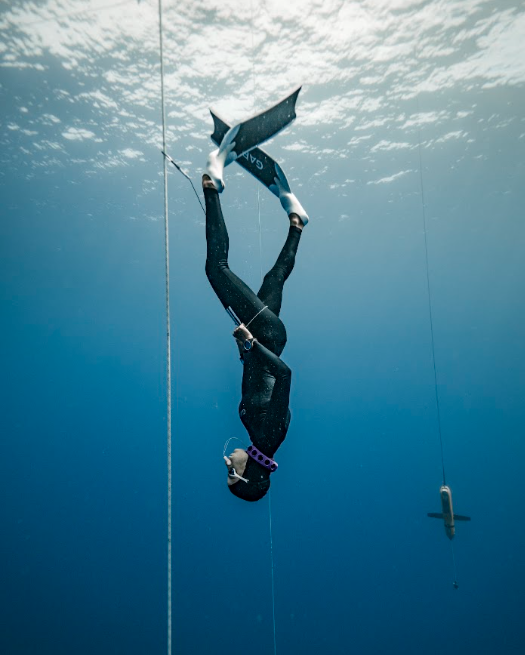
Despite the difficult start, I managed to stay focused on the next performances. The biggest success of the championship came in the CWTB discipline, where I dived to 92 metres, set a new personal best and finished fourth in the world. Only one place separated me from a medal. Although it was a little bitter to finish just off the podium, I was extremely happy with the result. A dive to 92 metres with bifins was an important step forward and confirmation that I can compete with the best female freedivers in the world.
AIDA – Cyprus: an unexpected end to the season
After the world championship in Honduras there wasn’t much time to rest. The next goal was the AIDA World Apnea 2026 Depth Championship, held in Limassol, Cyprus, from 27 September to 10 October.
I already know Cyprus well as a competition and training destination, as I have spent a lot of time there in previous years and done many depth training sessions.
This time, however, the preparations did not go to plan. Just before the start of the championship I fell ill, so I couldn’t train normally for several days. Before the competition I managed only two successful training dives, far fewer than I had planned. Because of the illness and the lack of training, I decided to come to the championship without big expectations. My main goal was to do safe, relaxed and technically good dives and gradually get a feel for the depth.
I therefore announced my first competition dive quite conservatively. I wanted a calm start without unnecessary pressure. This decision turned out to be the right one, as I gained more confidence with every dive. In the bifins discipline I dived to 88 metres. The conditions were not entirely ideal, as there was some current and equalisation didn’t go as smoothly as I would have liked. Even so, I completed the dive successfully.
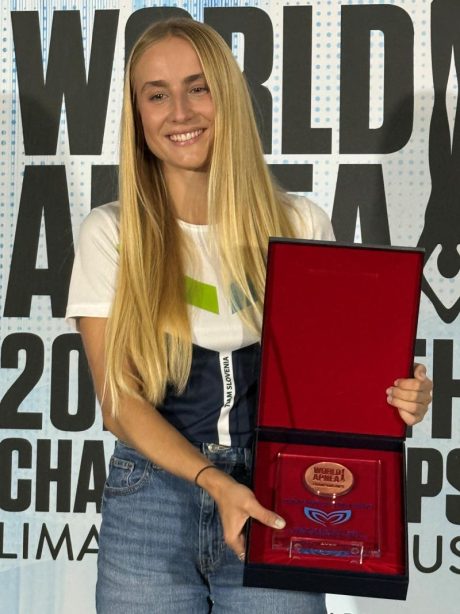
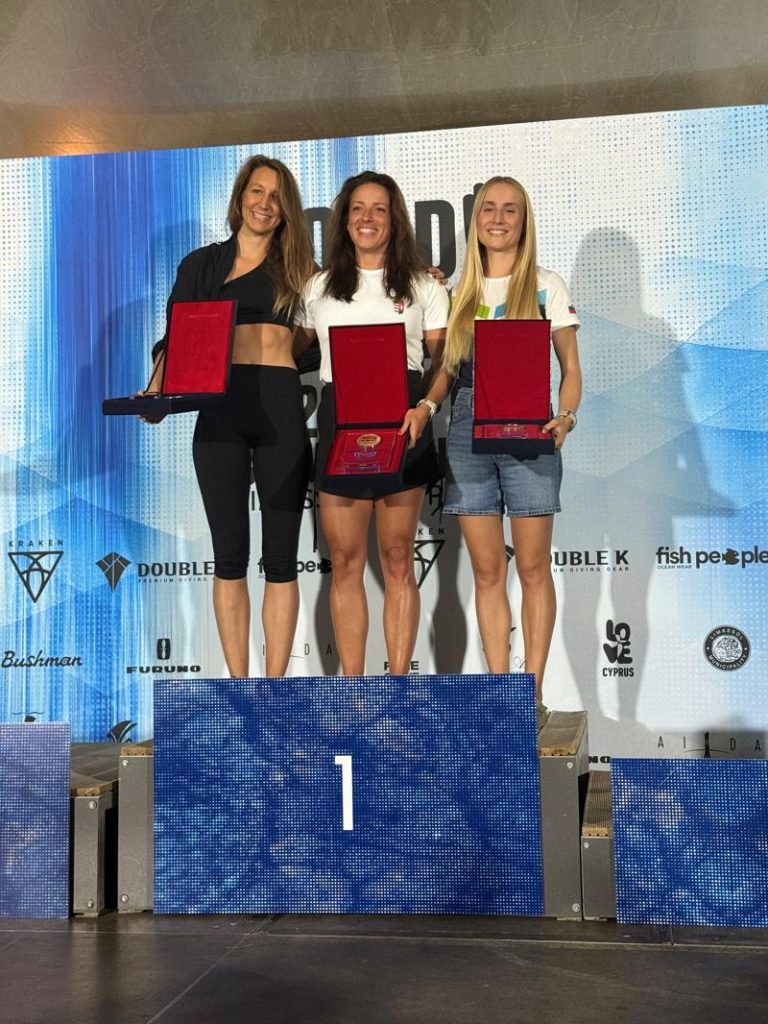
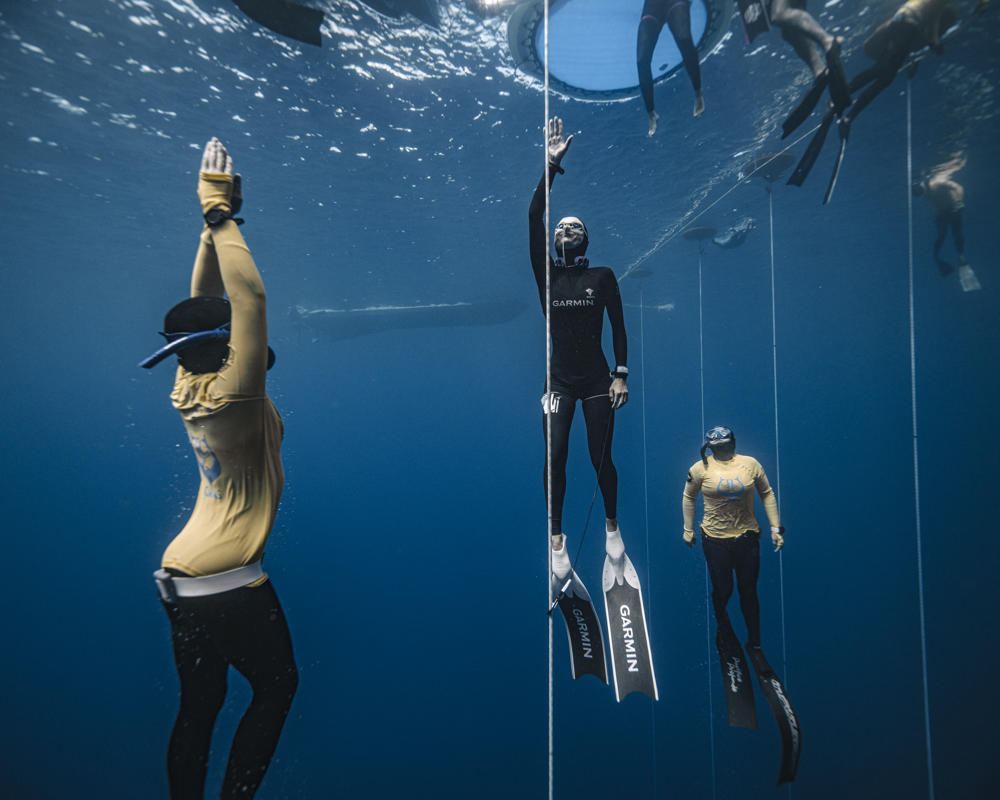
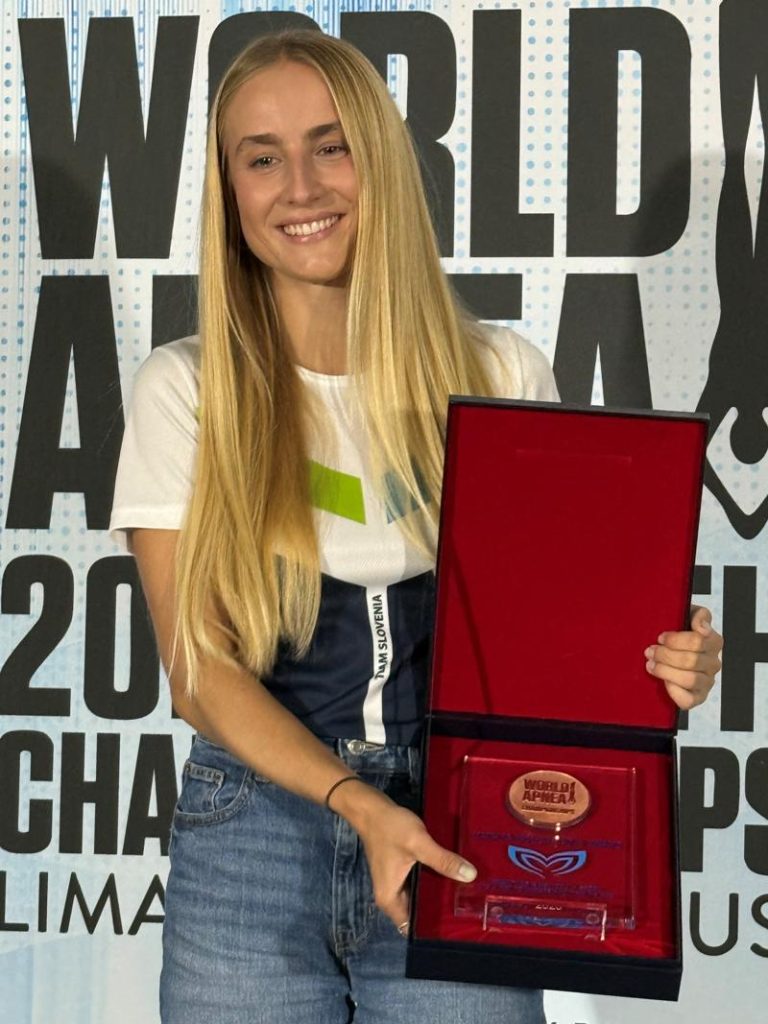
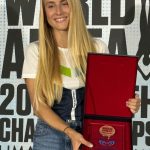
Right up to the last competition day I managed to keep a streak of successful dives with white cards. Before my last performance I knew I had a chance of a very high overall placing, but I tried to focus mainly on the execution of the dive rather than on the result. I finished the championship with a successful 90-metre monofin dive (CWT), which secured me third place in the women’s overall ranking among 51 competitors from all over the world.
The overall title went to Zsófia Törőcsik from Hungary and second place to Sanda Delija from Croatia, while I stood on the overall podium of an AIDA World Championship for the first time.
It was a truly special moment for me. Given the circumstances before the start of the championship, I can hardly imagine a better end to the season.
When depth is not the only challenge
Depth freediving competitions are not just a test of physical fitness. At great depths, mental preparation, the ability to relax, efficient equalisation and, above all, self-confidence become increasingly important.
This year I was reminded once again how important it is to accept circumstances you have no control over. At one championship I had to deal with disappointment after an unsuccessful start, and at the other with illness and uncertainty about my readiness.
At such moments the biggest challenge can be not trying to force your way into making up for lost time, but trusting your body and your experience.
As a physiotherapist, I am particularly aware of the importance of physical fitness, recovery and understanding the physiological responses to diving. But over my years of competing I increasingly find that a top result doesn’t depend only on how physically capable you are, but also on how effectively you can use your abilities at the right moment.
Looking ahead
I am closing this season with two extremely important results: fourth place at the CMAS World Championship and third place overall at the AIDA World Championship.
Both successes mean a lot to me and, above all, give me extra motivation for further work. My long-term goal remains progressing in depth, improving my personal bests and fighting for the top places at the biggest international competitions.
If this season has taught me anything, it is that the road to success rarely goes entirely to plan. Sometimes it is precisely the most demanding circumstances in which you discover how much you are really capable of.
And although this year I have already come very close to my biggest sporting goals, I feel there is still plenty of room for progress.
Mojca Haberman